Tag: news

  • Smart Cities Series – II – Sustainability

    Smart Cities Series – II – Sustainability

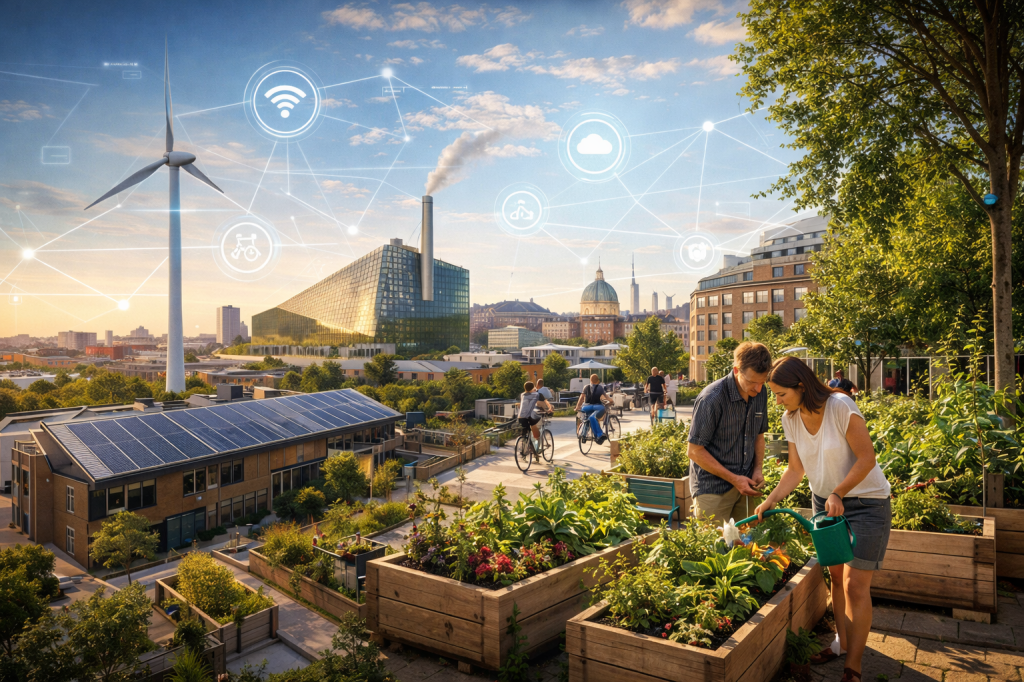
    Sustainability, Climate Crisis, and the Responsibility of Smart Cities


    This piece looks at smart cities not as technological showcases, but as urban systems increasingly shaped by climate pressure, sustainability priorities, and governance choices.


    What does sustainability require from smart cities today?

    Sustainability has become a central reference point in contemporary urban discourse. It appears across climate negotiations, European policy frameworks, and smart city strategies. Yet its growing visibility has not always translated into clarity. Sustainability is still too often framed as a long-term aspiration, while climate-related disruptions increasingly define the present.

    Wildfires, floods, earthquakes, heatwaves, and infrastructure stress are no longer exceptional events. They shape everyday urban realities. In this context, discussions around smart cities require a shift in focus. Beyond efficiency and innovation, the question becomes how cities organise their technological, institutional, and governance capacities under conditions of risk and uncertainty.

    Smart cities, therefore, cannot be understood solely as digitally enhanced environments. They are better examined as urban systems expected to operate amid disruption—where preparedness, coordination, and continuity matter as much as technological capability.


    Digitalisation under climate pressure

    Much of the smart city debate has historically prioritised digitalisation: sensors, platforms, real-time data, and automated systems.

    While these elements are important, technology alone does not determine whether a city becomes more sustainable. Without clear priorities and governance frameworks, digitalisation risks remaining detached from pressing social and environmental challenges. From a sustainability perspective, the relevance of smart city technologies lies in how they support urban capacity: anticipating risks, coordinating responses, and maintaining essential services under stress. This involves not only technical performance, but also institutional coordination and public trust.

    In climate-affected cities, the effectiveness of smart city solutions depends less on their visibility and more on their integration into everyday urban functions.

    Sustainability beyond environmental indicators


    Sustainability is often measured through environmental indicators such as emissions, energy efficiency, or resource use. While these dimensions remain essential, they do not fully capture the broader implications of smart city development.

    A sustainable city must also consider how digital systems affect access to services, participation in decision-making, and the distribution of risks and benefits across different social groups. In this sense, sustainability intersects with governance and social equity. Smart city initiatives inevitably shape urban power relations, influencing whose needs are prioritised and whose vulnerabilities are addressed.

    This perspective frames sustainability as a structuring principle rather than a sectoral policy goal requiring alignment between technological choices, institutional responsibility, and social inclusion.

    An illustrative case: Copenhagen


    The relationship between sustainability and smart city development becomes more tangible when examined through specific urban contexts. Copenhagen offers an illustrative example of how digital technologies can be embedded within long-term climate and quality-of-life objectives.

    In Copenhagen, smart city solutions are closely aligned with broader sustainability strategies, including ambitions for carbon neutrality and environmentally responsible urban living. Digital systems support energy management, sustainable mobility, and environmental monitoring, yet they are not positioned as central branding elements. Instead, they function as supporting infrastructures within a wider policy framework.

    What is particularly notable is how sustainability is translated into everyday urban practices. Mobility systems, data-informed planning, and environmental technologies work together to support behavioural change without relying on constant technological visibility. In this context, smart technologies reinforce existing sustainability goals rather than redefining them.

    Copenhagen’s experience suggests that smart city development gains relevance when digitalisation remains subordinate to clearly articulated environmental and social priorities. Technology serves as an enabling layer rather than a defining feature of urban identity.

    Closing perspective


    Rather than asking how smart cities can become more technologically advanced, the more relevant question today is how digital systems can remain aligned with sustainability priorities, governance responsibilities, and everyday urban realities.


    This reflection draws on recent climate discussions within the COP process, European policy frameworks such as the EU Climate-Neutral and Smart Cities Mission, human-centred smart city assessments including the IMD Smart City Index, and comparative insights from my doctoral research on smart cities and urban communication.


    The next posts in this series will explore how different cities translate these priorities into practice revealing where approaches converge, where tensions emerge, and what these choices mean for urban futures shaped by climate uncertainty.

  • Smart Cities Series – I – Smart City Branding

    Smart Cities Series – I – Smart City Branding

    Smart City Branding: What Can Smart Cities Really Change?


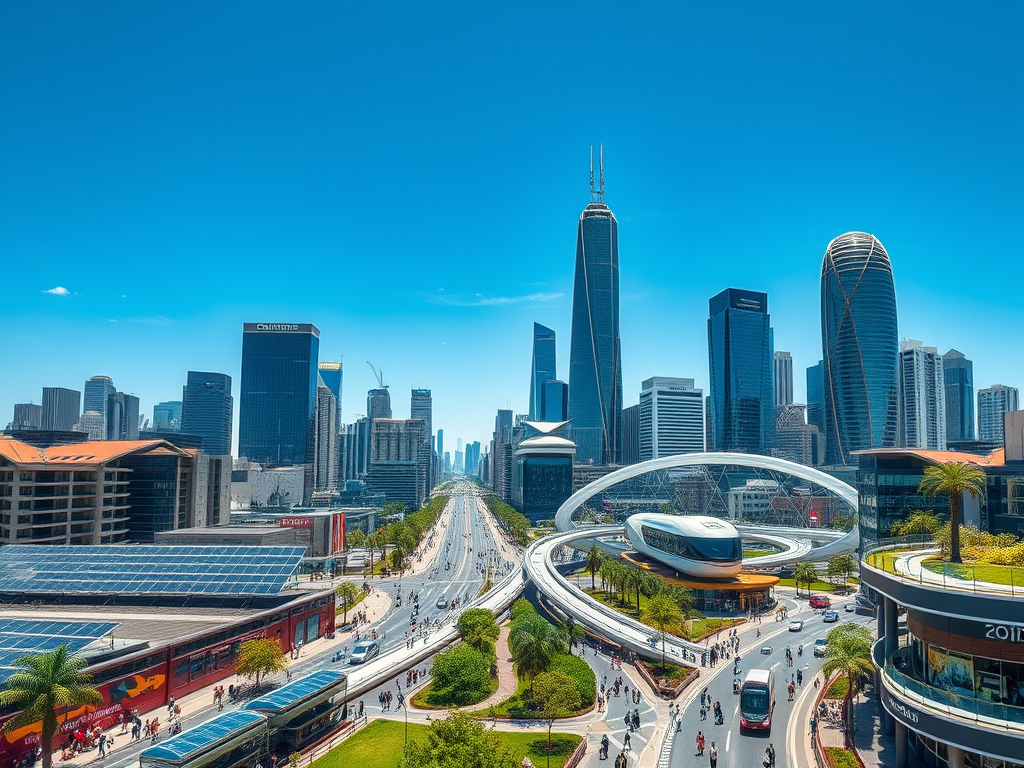
    What can smart cities really change?

    This question has stayed with me throughout my doctoral journey—not because it has a single answer, but because it keeps unfolding as cities adapt to technology, or are increasingly reshaped by it. Discussions around smart cities often emphasize efficiency, data, and innovation.

    Yet what remained with me most strongly is a simple insight:

    “Smart technologies are not neutral infrastructures. They actively participate in shaping how cities define themselves, how they are perceived, and how they position their futures.

    Technology-driven change rarely arrives with all its implications fully understood. Digital systems and platforms usually enter urban life first; governance models, ethical debates, and social reflections tend to follow later.

    Cities are no exception. Smart technologies begin reorganizing everyday urban experiences long before their broader social and communicative consequences are fully visible. From this perspective, smart cities cannot be reduced to technical systems alone.

    “They are better understood as communication ecosystems spaces where technology intersects with governance, institutions, citizens, visitors, and global audiences. What matters is not only which technologies are implemented, but how they are communicated, governed, and experienced.”

    This is where smart city branding becomes particularly visible. City branding is often associated with logos, slogans, or promotional campaigns. In reality, it is shaped by everyday experiences, narratives, and meanings that unfold over time.

    Smart technologies inevitably become part of these narratives. They influence what a city stands for, what it prioritizes, and how it imagines its future. Rather than emerging through isolated technological projects, smart city branding takes shape through a set of interrelated components.

    Smart Communication
    Smart communication plays a central role in how cities translate technological change into meaning. In cities like Seoul, digital technologies are not only functional tools but part of everyday urban life and cultural production. The integration of smart services with global cultural industries such as K-pop allows the city to project a dynamic, future-oriented identity where technology and culture reinforce each other.

    Stakeholders
    The way smart technologies shape city branding is closely linked to stakeholder involvement. Amsterdam demonstrates how collaboration between public institutions, start-ups, researchers, and citizens enables smart city initiatives to move beyond symbolic participation. Here, technology becomes a shared project rather than a top-down agenda, strengthening both governance and brand credibility.

    Smart Governance
    Governance models determine whether smart technologies enhance transparency or remain abstract promises. Cities such as Berlin and London reflect hybrid approaches, where digital innovation intersects with creative industries and cultural heritage. These cities negotiate continuity and change, producing multi-layered identities shaped by openness, creativity, and institutional complexity.

    Sustainability
    In some cities, sustainability provides the primary narrative through which smart technologies gain legitimacy. Copenhagen consistently positions itself as a carbon-neutral city, embedding digital solutions into long-term climate goals and quality-of-life narratives. Here, smart technologies reinforce a value-based brand identity rather than standing out as isolated innovations.

    Digital Infrastructure
    Digital infrastructure shapes who can participate in urban life and whose experiences are made visible. In contrast, Istanbul presents a strong cultural and historical narrative but remains in a transitional phase when it comes to integrating smart city technologies into its branding. Digital communication continues to foreground heritage and aesthetics, while technological infrastructures remain less visible within the city’s brand narrative.

    Smart Tourism
    Smart tourism mediates how cities present themselves to global audiences. In hybrid and transitional contexts, tourism communication often becomes the dominant branding channel, amplifying heritage and aesthetics while leaving smart infrastructures in the background.

    Taken together, these observations suggest that smart city branding is not about adopting the same technologies, but about how cities translate technology into meaning. The question is no longer whether a city is smart, but how smart technologies are aligned with values, governance, and everyday experience.

    This post opens the Smart Cities Series. In the next piece, I will move closer to smart city cases and tech-oriented updates, focusing on current developments, country examples, and emerging discussions shaping urban futures.

    Acknowledgement
    This reflection is informed by conversations and interviews conducted as part of my doctoral research. I am sincerely grateful to the city branding and smart city experts who generously shared their time, insights, and experiences.

  • How AI is Transforming the Role of Media in Public Diplomacy

    How AI is Transforming the Role of Media in Public Diplomacy

    Media has always been the heart of public diplomacy, but AI is now redefining its beat.

    Back in 2021, I published my first article about media’s role in public diplomacy. It was an attempt to figure out how nations tell their stories, shape perceptions, and build connections across borders. At the time, public diplomacy revolved around traditional tools like radio and television—familiar, steady, and effective in shaping global narratives.

    But things have changed, haven’t they? In just a few years, we’ve shifted from one-way messaging to interactive, data-driven engagement. AI now makes it possible to analyze global sentiment in real time, craft highly personalized strategies, and create innovative stories that resonate deeply with audiences. It’s a transformation that’s rewriting the way nations communicate.

    Revisiting my original article got me thinking: How do the timeless principles of public diplomacy fit into this AI-driven world? Can we embrace innovation while staying true to authenticity?

    At its core, public diplomacy is—and always has been—about connection. Not just between governments, but between people. Back in 1964, Edmund Gullion coined the term to capture this very idea. And Hans N. Tuch put it beautifully:

    “The communication of a nation’s ideas and ideals to foreign audiences, using media to gain support for policies and values.”

    Media has always been the glue holding these efforts together, from traditional broadcasting to digital platforms like Instagram and YouTube. But now, with AI entering the picture, the pace of change feels faster than ever.

    In this blog, I revisit Nicholas Cull’s five dimensions of public diplomacy—listening, advocacy, cultural diplomacy, exchange, and international broadcasting—to explore how AI is breathing new life into these ideas. So, how is the digital era shaping the future of public diplomacy? Let’s find out together.


    The Shift to Digital in PD

    At the heart of public diplomacy lies its transformative power to shape narratives—how stories are told, framed, and received by global audiences. Media has always played a crucial role in this process, turning complex diplomatic agendas into relatable and compelling stories.

    “Public diplomacy thrives on the ability to influence foreign audiences through strategic communication and media platforms. By leveraging international broadcasting and digital tools, nations can effectively communicate their values, policies, and ideals to global audiences.”
    – Şeyma Filiz, 2021

    In the digital age, this framing process has become more dynamic than ever. Social media platforms enable governments to engage directly with audiences, not just broadcasting messages but participating in conversations. Narratives are no longer static—they’re co-created with the public in real time.

    However, this new landscape is not without its challenges. Disinformation has become a significant hurdle, undermining trust and distorting narratives. In an era where viral content can spread faster than verified information, fabricated stories risk damaging diplomatic relationships. Governments now face the dual responsibility of promoting their messages while actively countering false information.

    “Sustained trust in public diplomacy requires transparent and culturally sensitive communication efforts.”
    – Şeyma Filiz, 2021

    To address these challenges, governments and organizations are leveraging digital tools, including AI, to monitor online spaces, identify disinformation campaigns, and respond swiftly. While these tools are highly effective, they require ethical and culturally sensitive implementation to maintain credibility and foster trust.

    Why Stories Matter

    If there’s one thing I’ve come to realize, it’s this: public diplomacy thrives on storytelling. It’s not just about broadcasting facts or policies—it’s about crafting narratives that resonate, inspire, and connect. The way a story is framed can make all the difference. Media isn’t just a platform; it’s the thread that ties stories together, creating a bridge between nations and cultures.

    As I wrote in my earlier work:

    “Public diplomacy thrives on the ability to influence foreign audiences through strategic communication and media platforms. By leveraging international broadcasting and digital tools, nations can effectively communicate their values, policies, and ideals to global audiences.”
    – Şeyma Filiz, 2021

    That insight still holds true, but the way we craft these narratives has transformed. In the digital era, stories are no longer static. They evolve in real time, shaped not just by governments but by the public itself. Social media has made storytelling a shared endeavor. Narratives now emerge from dialogue, from listening as much as speaking.

    This is where AI begins to reshape the storytelling process. Imagine having tools that can analyze global sentiment in real time, track emerging trends, and refine your message to truly resonate. AI doesn’t just make storytelling faster—it makes it smarter. It allows nations to craft narratives that are timely, relevant, and deeply personal to their audiences.

    But here’s the catch: AI, for all its power, is still just a tool. It can enhance storytelling, but it can’t replace the human connection that makes stories meaningful. The challenge is clear: how do we leverage AI to complement, rather than overshadow, the authenticity and empathy at the heart of public diplomacy?

    AI: Changing the Game

    Let’s talk about AI. It’s not just a buzzword; it’s reshaping how nations connect and communicate. But as I think about this transformation, I can’t help but revisit Nicholas J. Cull’s five dimensions of public diplomacy—listening, advocacy, cultural diplomacy, exchange, and international broadcasting. These dimensions have long guided how we understand public diplomacy. So, what happens when we look at them through the lens of AI?

    Take listening, for example. Governments have always sought to understand public sentiment, but AI takes this to a whole new level. Real-time tools can now analyze trends, track emotions, and even predict what audiences might care about next. It’s like having a direct line to the pulse of global opinion.

    And advocacy? Generative AI is a game-changer here. It can craft personalized messages for diverse audiences, making advocacy efforts not just smarter but more human. Imagine a campaign that speaks directly to you, in your language, and aligns perfectly with your interests.

    Cultural diplomacy is also evolving. Cull’s original framework emphasized the power of sharing a nation’s culture, and AI brings that to life in ways we couldn’t have imagined before. Virtual museum tours, multilingual storytelling, and immersive experiences make cultural exchange more accessible and engaging than ever.

    Let’s not forget exchange programs. Traditional student and professional exchanges were limited by physical and linguistic barriers. Now, AI-powered translation tools and virtual classrooms are creating seamless connections across borders.

    Even international broadcasting, one of the oldest dimensions, is transforming. With AI, content is not only curated but personalized. Broadcasters can ensure their stories resonate with audiences worldwide, making messages more impactful and relevant.

    But here’s where it gets interesting: AI doesn’t replace Cull’s dimensions—it enhances them. Each one adapts to the possibilities of this new era while staying true to its original purpose.

    So, let’s think about this together. How do we embrace these AI-driven innovations without losing the essence of public diplomacy? How do we balance technological efficiency with human connection? This is the challenge—and the opportunity—before us.

    AI is just a tool, after all. Its true power lies in how we choose to use it. What do you think? Are Cull’s dimensions ready for the AI age, or do we need to rethink the framework entirely? Let’s explore this exciting shift together.

    Looking Ahead

    What I find most fascinating is how public diplomacy keeps evolving. Traditional methods aren’t disappearing; they’re transforming. Media remains the backbone, but now it’s paired with digital innovation and AI to create something even more impactful.

    We’re at a point where public diplomacy isn’t just about telling stories—it’s about shaping them collaboratively. And that, to me, is the real magic.

    So, what’s next? How do you see AI influencing public diplomacy in your field? Whether you’re an academic, a media professional, or just curious about the intersection of technology and storytelling, I’d love to hear your thoughts. Let’s explore this together.

    Comments

    Leave a comment

    © 2024 Şeyma Filiz. All rights reserved. | Privacy Policy | Terms of Use